Technology & Innovation
Michael Turner
October 10, 2026
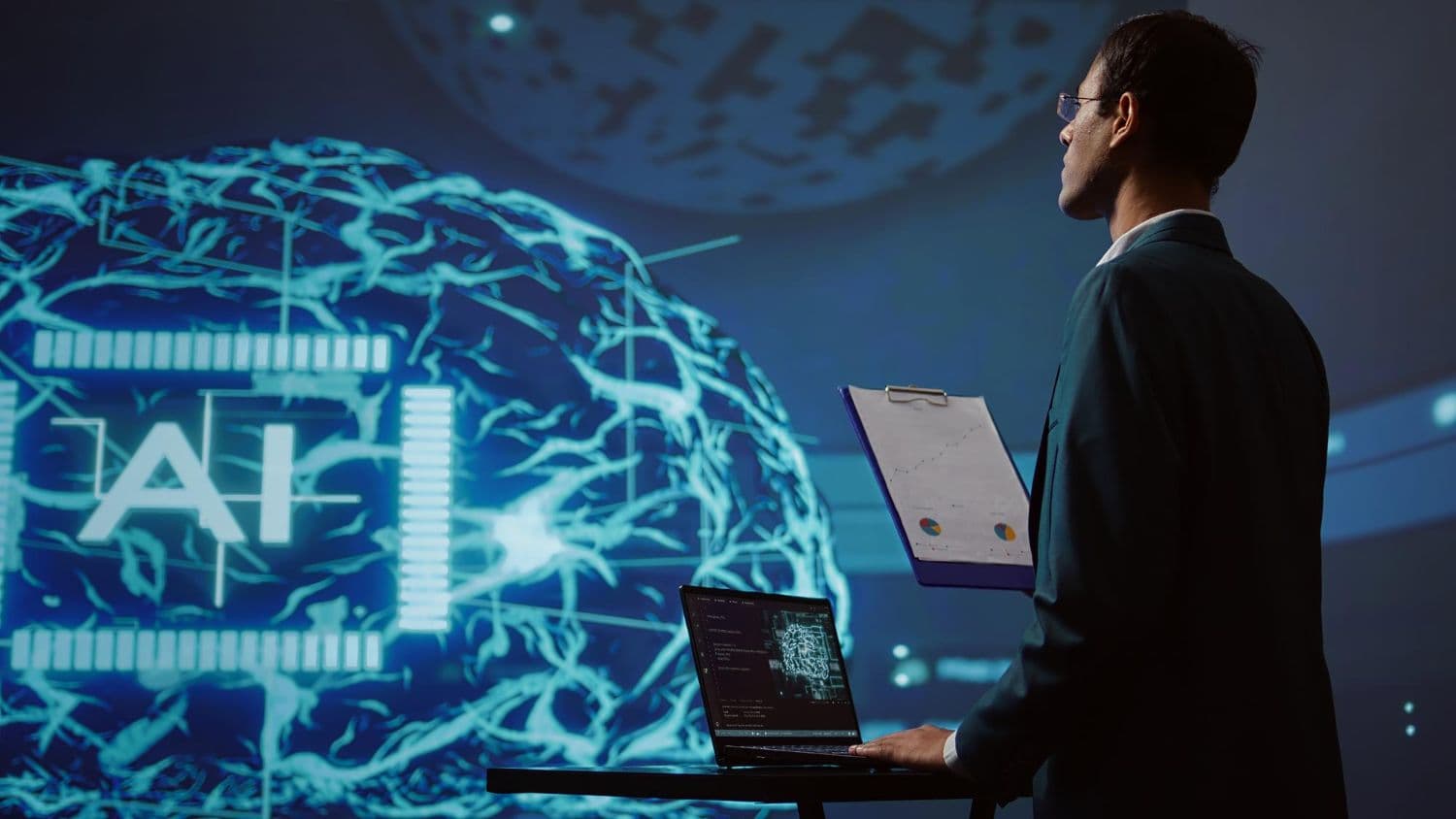
How AI Is Transforming Business Operations
Discover how artificial intelligence enhances productivity, decision-making, and customer engagement across industries.
Introduction: The Age of Intelligent Operations
Artificial Intelligence (AI) is no longer a futuristic idea — it’s a reality reshaping how companies operate every single day.
From automating routine tasks to providing deep insights into market trends, AI is transforming business operations at every level.
In 2025 and beyond, organizations that adopt AI strategically will gain significant advantages in efficiency, speed, and customer satisfaction.
1. Boosting Productivity Through Automation
AI-powered automation has changed how work gets done. Tasks that once required hours of manual effort can now be completed in minutes with precision and consistency.
Key examples of automation in action:
- Manufacturing: Robots and predictive maintenance systems reduce downtime and improve output quality.
- Finance: AI automates invoice processing, fraud detection, and compliance monitoring.
- Human Resources: Intelligent chatbots screen resumes and schedule interviews, saving HR teams countless hours.
AI doesn’t just make work faster — it makes it smarter, allowing employees to focus on creative and strategic tasks instead of repetitive processes.
2. Enhancing Decision-Making with Data Intelligence
Modern businesses generate enormous volumes of data daily. AI helps turn that data into actionable insights.
Machine learning models identify patterns, forecast trends, and support leaders in making evidence-based decisions.
How AI improves business decisions:
- Predictive analytics forecasts demand, helping companies manage inventory and resources efficiently.
- Sentiment analysis allows brands to monitor public perception and adjust their messaging in real time.
- Financial modeling powered by AI helps executives simulate different business scenarios with incredible accuracy.
With AI, decision-making becomes proactive rather than reactive — enabling organizations to anticipate opportunities before they arise.
3. Revolutionizing Customer Engagement
Customer expectations are higher than ever, and AI enables companies to meet and exceed them.
From personalized recommendations to real-time support, AI ensures that every customer interaction feels more human — not less.
AI-driven customer experiences include:
- Chatbots and virtual assistants that respond instantly and resolve most queries without human help.
- Recommendation engines like those used by Netflix or Amazon, which tailor content and product suggestions.
- Voice recognition and natural language processing (NLP) for smoother, more intuitive customer interactions.
AI allows businesses to deliver personalization at scale — improving satisfaction while reducing service costs.
4. Streamlining Supply Chain and Logistics
The global supply chain has become more complex than ever, but AI is simplifying the chaos.
Through predictive analytics and real-time tracking, businesses can manage logistics with unprecedented efficiency.
Impact areas:
- Demand forecasting helps prevent both shortages and overstocking.
- AI-powered routing reduces delivery times and fuel costs.
- Supplier risk analysis identifies potential disruptions before they occur.
The result is a more resilient, agile, and cost-effective supply network — one capable of adapting instantly to global challenges.
5. Strengthening Security and Compliance
AI also plays a critical role in protecting businesses from digital threats.
Machine learning systems continuously analyze data for suspicious patterns and detect anomalies before they become major breaches.
AI applications in security:
- Cyber threat detection: Identifies unusual network activity in real time.
- Fraud prevention: Spots irregular transaction behaviors faster than human analysts.
- Compliance monitoring: Ensures that operations align with legal and regulatory standards automatically.
By integrating AI into cybersecurity, companies reduce risks and strengthen trust among customers and partners.
6. The Human-AI Collaboration
While some fear that AI will replace human jobs, the reality is more collaborative.
AI is not here to replace — it’s here to assist. The most successful companies are those that empower employees with AI tools rather than view them as a threat.
The future of work will be defined by:
- Humans providing creativity, empathy, and strategy.
- AI handling analysis, automation, and execution.
- A culture of innovation where both coexist in harmony.
This synergy creates organizations that are both highly efficient and deeply human.
Conclusion: Redefining the Way Businesses Operate
Artificial Intelligence is no longer optional — it’s foundational.
Companies across every sector are discovering that AI-driven operations lead to better performance, smarter decisions, and stronger customer relationships.
As AI continues to evolve, businesses that invest early and integrate it thoughtfully will define the next era of success.
Blog Categories
SEO & Digital Marketing
(1)
Brand Strategy & Consultancy
(1)
Technology & Innovation
(1)
Technology & Innovation
(1)
Technology & Innovation
(1)
SEO & Digital Marketing
(1)